Address
Pantelleria, 91017 Sicily, Italy.

Buddha Sculptures in Modern Interior Design: A Timeless Statement

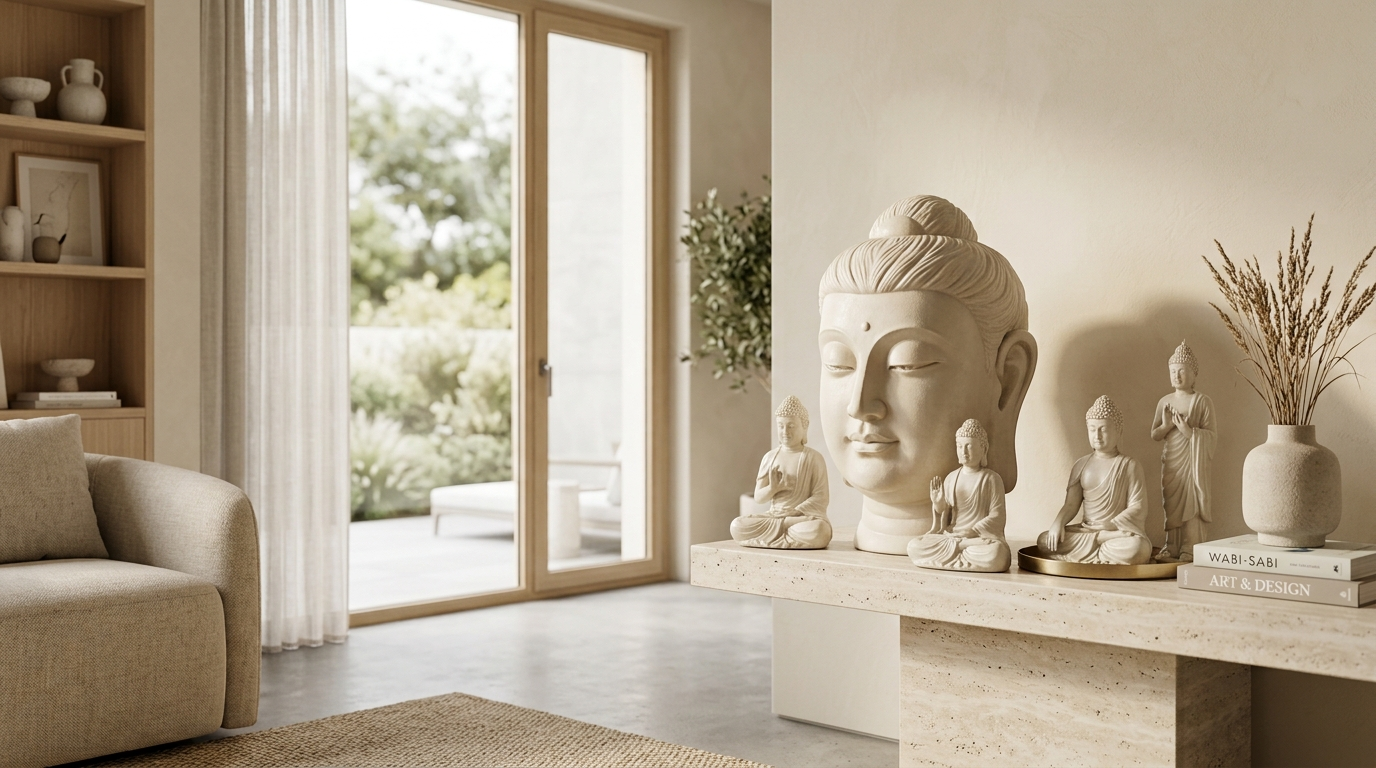
Modern interior design is constantly evolving, yet some forms remain remarkably timeless.
A Buddha sculpture is one of them.
With its distinctive silhouette, balanced proportions and serene expression, a Buddha head can become much more than a decorative object. In a contemporary interior, it can act as a sculptural focal point, bringing together art, architecture and a sense of visual calm.
Today, Buddha sculptures can be found in a wide variety of sophisticated environments, from minimalist homes and luxury apartments to boutique hotels, creative studios and contemporary offices.
The key is not to make the sculpture dominate the room, but to allow it to become part of the overall composition.
At Maitreya Buddha, we approach each piece as an object of art designed to complement refined interiors.
Why Buddha Sculptures Work in Modern Interiors
Contemporary interiors often rely on clean architectural lines, carefully selected materials and a limited number of decorative elements.
This creates an ideal environment for sculpture.
A Buddha head has a strong visual identity without requiring excessive decoration around it. Its organic curves can soften the geometric lines of modern architecture, while its presence can introduce a sense of balance into a minimalist space.
The result is a contrast between architectural structure and sculptural form.
This relationship is one of the reasons Buddha sculptures continue to work so naturally in contemporary interiors.
A Sculpture Can Become the Focal Point
Every well-designed room needs a visual hierarchy.
Without it, even a beautiful interior can feel visually scattered.
A carefully positioned Buddha sculpture can create a natural focal point.
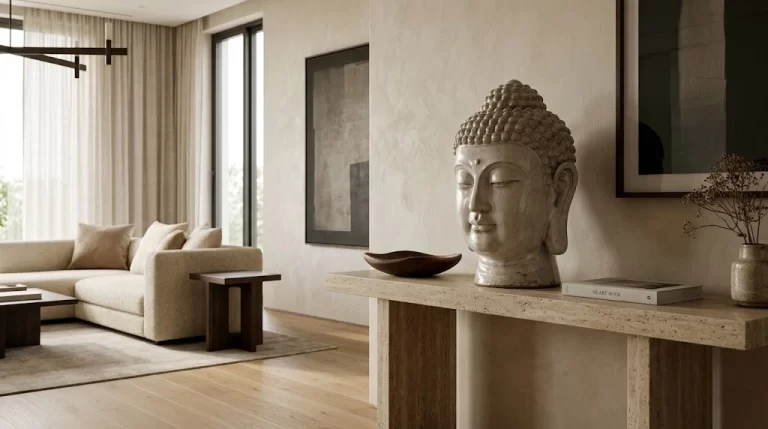
Placed on a console, sideboard or architectural pedestal, the sculpture immediately attracts attention while maintaining a sophisticated relationship with the surrounding space.
The key is to avoid competing visual elements.
If the Buddha is intended to be the focal point, surrounding it with too many decorative objects can reduce its impact.
Instead, give the sculpture room to breathe.
Buddha Sculptures and Minimalist Design
Minimalism is based on restraint.
Rather than filling a room with objects, minimalist interiors focus on proportion, materials, light and space.
A ceramic Buddha head can fit naturally into this philosophy.
A white or ivory sculpture against a neutral wall creates a subtle composition where texture and form become more important than color.
A darker sculpture can be used to introduce contrast without adding visual clutter.
In both cases, simplicity is what allows the sculpture to become powerful.
The Japandi Connection
Japandi design combines Japanese simplicity with Scandinavian warmth.
Natural materials, neutral tones, functional furniture and carefully selected decorative elements define the style.
Ceramic Buddha sculptures can complement this aesthetic particularly well.
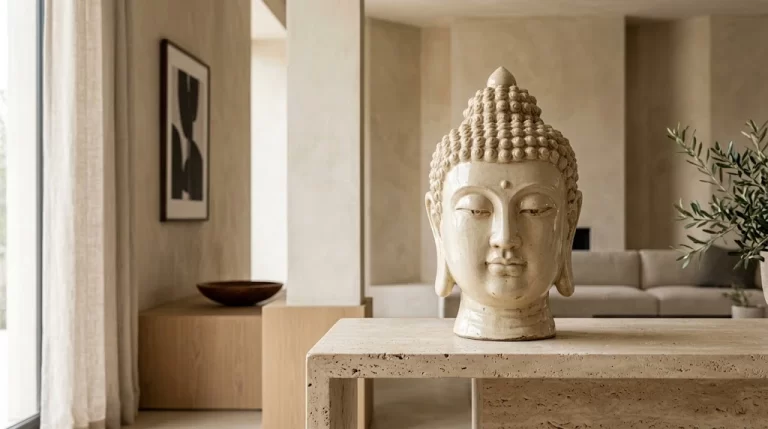
Imagine an ivory ceramic Buddha head displayed on a warm oak console, surrounded by soft linen, natural stone and diffused daylight.
The result is understated and harmonious.
The sculpture does not need to look traditional or ornamental. Its form alone can contribute to the calm visual language of the space.
Modern Classic Interiors
Modern Classic interiors combine contemporary simplicity with traditional architectural details.
Think marble, mouldings, refined furniture, natural wood and elegant lighting.
A Buddha sculpture can provide an unexpected contemporary element within this environment.
A sophisticated ceramic finish can contrast beautifully with classical materials such as marble or dark wood.
The result is an interior that feels established yet contemporary.
Contemporary Luxury
Luxury interiors increasingly focus on quality rather than quantity.
Instead of filling a room with decorative objects, designers often use a limited number of distinctive pieces.
This approach creates an opportunity for sculptural art.
A large Buddha head with a refined ceramic finish can function almost like a piece of contemporary gallery art.
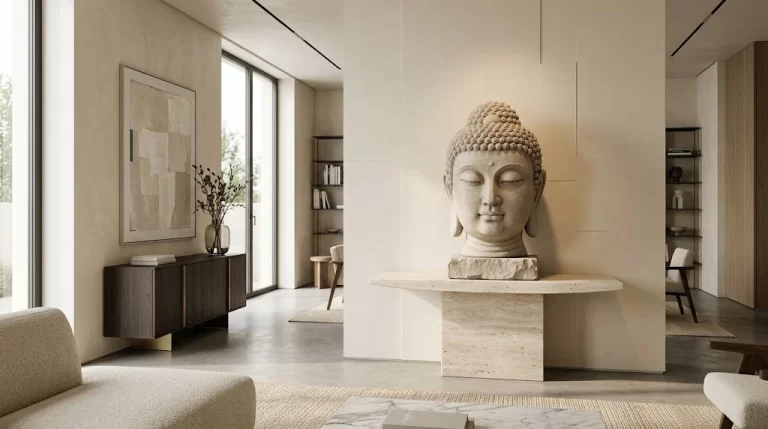
Placed against a large architectural wall or on a substantial stone console, it can become one of the defining elements of the room.
The surrounding space should remain relatively restrained.
Luxury often comes from allowing exceptional objects to stand on their own.
Choosing the Right Color
Color plays an important role in integrating a sculpture into an interior.
White and Ivory
White and ivory sculptures are exceptionally versatile.
They work with neutral interiors and can create a sophisticated monochromatic composition.
They are particularly effective against textured walls, natural stone and darker architectural elements.
Black
Black creates contrast.
A black ceramic Buddha head can become a powerful visual anchor in a light interior.
It works particularly well with:
- Travertine
- Marble
- Light wood
- Concrete
- Brushed metal
- Neutral textiles
Warm Neutral Tones
Beige, sand and stone-inspired finishes create a softer relationship with organic interiors.
These colors can blend naturally with wood, linen and natural stone while maintaining enough contrast to remain visible.
Metallic Accents
Gold and subtle metallic details can introduce warmth and sophistication.
The key is restraint.
A metallic finish works particularly well when it connects visually with existing elements such as lighting, furniture hardware or architectural details.
Materials That Complement Ceramic
The beauty of ceramic becomes even more apparent when it is paired with contrasting materials.
Travertine
Travertine provides a warm, tactile foundation for a ceramic sculpture.
Its natural variations create an elegant contrast with the refined surface of ceramic.
Marble
Marble can create a more luxurious and architectural presentation.
The combination of stone and ceramic works particularly well in modern classic interiors.
Wood
Wood introduces warmth.
Light oak can create a soft Japandi atmosphere, while darker wood can produce a more dramatic and sophisticated composition.
Metal
Brass, bronze and black metal can add subtle architectural accents.
Used carefully, these materials can reinforce the contemporary character of the sculpture.
The Importance of Negative Space
One of the defining characteristics of sophisticated interior design is the use of negative space.
Empty space is not necessarily wasted space.
It allows architectural forms, furniture and artwork to be appreciated individually.
This principle is particularly important with Buddha sculptures.
Rather than surrounding the piece with numerous accessories, consider giving it a dedicated area.
A large wall, a simple console and a single sculpture can create a stronger visual impact than a crowded arrangement.
Lighting as Part of the Design
A sculpture changes throughout the day depending on how light interacts with its surface.
Natural daylight can reveal subtle ceramic textures and create soft shadows.
At night, carefully positioned accent lighting can emphasize the contours of the sculpture.
For an especially refined presentation, use indirect or directional lighting rather than harsh overhead illumination.
The objective is not simply to illuminate the sculpture.
It is to reveal its form.
From Decoration to Art
The difference between decoration and art often comes down to intention.
A decorative object fills a space.
A sculptural artwork contributes to the identity of that space.
A carefully selected Buddha head can achieve the latter.
Its silhouette, proportions, material and expression can influence how a room feels without requiring additional decoration.
This is particularly valuable in modern interiors where every object has a visual purpose.
Creating a Sense of Serenity
Modern life can often feel visually and digitally overwhelming.
Interior design can provide a counterbalance by creating spaces that feel calmer and more intentional.
The visual characteristics of a Buddha sculpture naturally lend themselves to this approach.
Its stillness, symmetrical form and contemplative expression can introduce a moment of visual pause.
It does not need to be the largest object in the room.
Sometimes its presence is most effective when it is subtle.
Where to Display a Buddha Sculpture
There are many possibilities depending on the architecture of the space.
Living Room
A living room console or sideboard is one of the most natural locations.
A larger sculpture can become an elegant focal point, particularly when positioned against a neutral architectural wall.
Entrance Hall
An entrance creates an immediate opportunity to introduce art and character.
A Buddha head displayed on a refined console can establish the visual language of the home from the moment someone enters.
Bedroom
A smaller sculpture can contribute to a quieter atmosphere.
Choose a simple setting with soft materials and restrained decoration.
Home Office
A sculptural piece can bring personality to a professional environment.
Placed on a shelf, sideboard or dedicated pedestal, it can provide a visual break from screens and functional objects.
Hospitality Spaces
Buddha sculptures can also work particularly well in boutique hotels, wellness environments, restaurants and luxury hospitality spaces where atmosphere is an important part of the experience.
A Timeless Statement
Interior trends will continue to change.
Colors, furniture styles and decorative preferences will evolve.
But a well-designed sculpture can remain relevant because its appeal is not dependent on a particular trend.
A ceramic Buddha head combines recognizable form, craftsmanship and artistic presence.
In the right setting, it becomes more than decoration.
It becomes part of the architecture of the room.
At Maitreya Buddha, we believe that exceptional interiors are created through carefully considered details.
A single sculptural piece can sometimes say more than an entire collection of decorative objects.