Address
Pantelleria, 91017 Sicily, Italy.

How to Style a Buddha Sculpture in a Luxury Interior

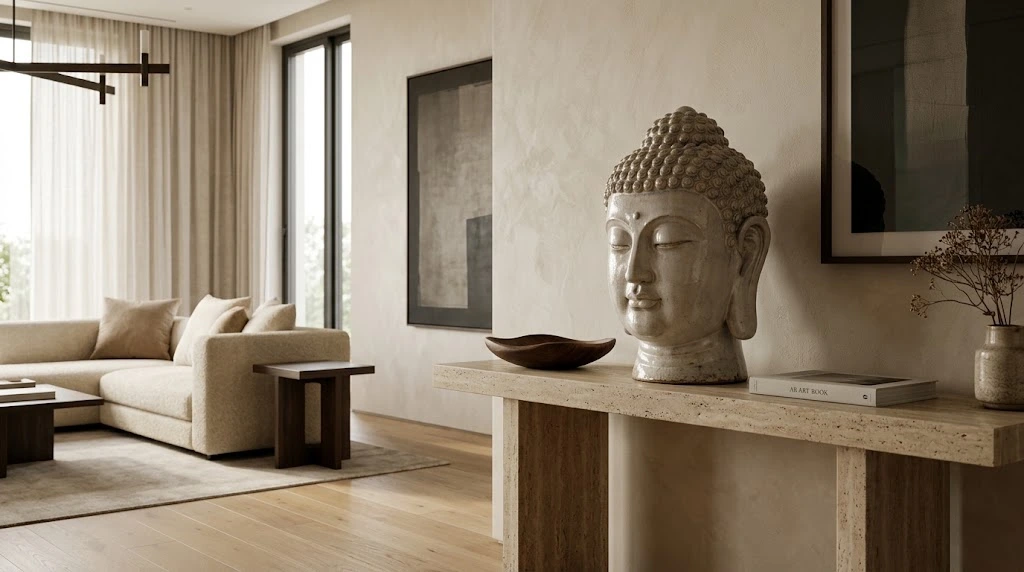
A carefully chosen Buddha sculpture can become much more than a decorative object. In a refined interior, it can introduce a sense of balance, calm and visual character while creating a distinctive focal point.
Whether your home follows a minimalist, contemporary, modern classic or more eclectic aesthetic, a ceramic Buddha sculpture can integrate naturally into the space when its placement, scale and surroundings are carefully considered.
At Maitreya Buddha, we see each sculpture as a statement piece — an object designed to bring together art, craftsmanship and timeless presence.
Choose the Right Space
The location of a Buddha sculpture can have a significant impact on how it is perceived.
Rather than filling a room with multiple decorative elements, consider giving the sculpture enough space to stand on its own. A console in an entrance, a refined living-room shelf or a carefully selected side table can provide an ideal setting.
The goal is not simply to place a sculpture somewhere empty, but to create a visual relationship between the piece and its surroundings.
Living Room
The living room is one of the most natural settings for a statement sculpture.
A larger Buddha head can become a focal point on a console, sideboard or architectural shelf. In a minimalist interior, the sculpture can provide contrast and personality without overwhelming the room.
Entrance Hall
An entrance offers an opportunity to make a strong first impression.
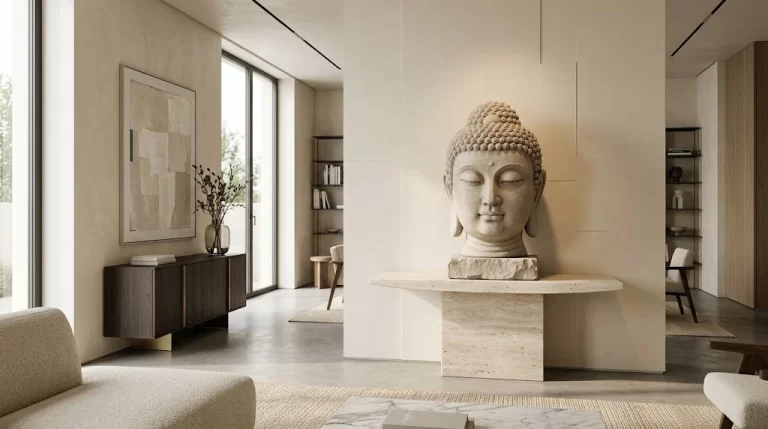
Placed on a console against a neutral wall, a ceramic Buddha head can create a sophisticated transition between the outside world and the calm atmosphere of the home.
Bedroom
For a quieter approach, consider a smaller sculpture placed on a dresser, console or dedicated shelf.
Neutral materials, soft lighting and uncluttered surroundings can enhance the sculpture’s serene character.
Consider Scale and Proportion
One of the most important principles of luxury interior design is proportion.
A sculpture that is too small can disappear within a large room, while an oversized piece may dominate the surrounding architecture.
Before choosing your Buddha sculpture, consider:
- The dimensions of the room
- The height of the furniture
- The available wall space
- The distance from which the sculpture will be viewed
- The relationship between the sculpture and surrounding objects
A statement piece should have enough visual presence to be noticed while remaining harmonious with the overall composition.
Let the Sculpture Breathe
Luxury interiors often rely on restraint.
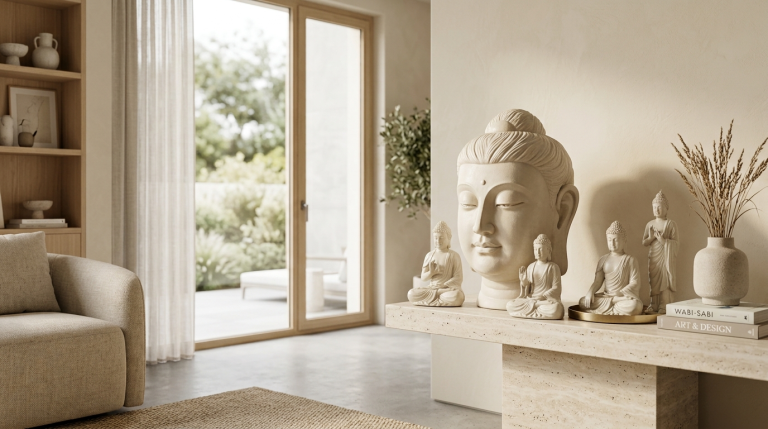
Instead of surrounding your Buddha sculpture with numerous decorative objects, leave some negative space around it. This allows the form, texture and expression of the sculpture to become the focus.
A single exceptional object can often have greater visual impact than a crowded arrangement.
Consider pairing the sculpture with only a few complementary elements:
Natural stone.
Marble, travertine and other natural stones can create an elegant material contrast with ceramic.
Wood.
Warm wood tones can soften a contemporary interior and create a more organic atmosphere.
Metal.
Subtle brass, bronze or black metal details can introduce a sophisticated accent.
Natural textiles.
Linen, wool and other tactile materials can add warmth without competing with the sculpture.
Choose a Finish That Complements Your Interior
The finish of a Buddha sculpture can dramatically influence the atmosphere of a room.
White Ceramic
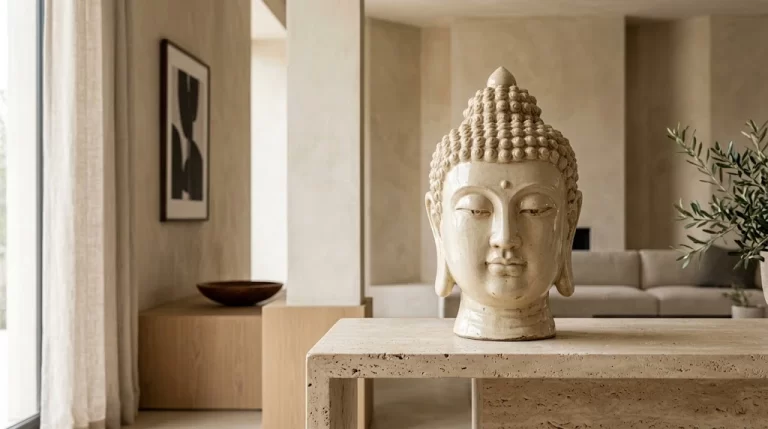
White and ivory ceramic create a clean, timeless aesthetic. They work particularly well with minimalist, Scandinavian, Japandi and contemporary interiors.
Black Ceramic
A dark sculpture creates stronger contrast and can add depth to a neutral interior. It works particularly well in modern and sophisticated spaces.
Gold and Metallic Accents
Gold can introduce warmth and a sense of luxury. Used thoughtfully, metallic finishes can complement brass lighting, architectural details or other refined decorative elements.
The key is harmony. Your sculpture should complement the interior rather than compete with it.
Create a Calm Visual Composition
A Buddha sculpture naturally draws attention to the face and its expression. This makes the area surrounding the piece particularly important.
Avoid placing it directly next to visually dominant objects such as large screens, busy artwork or heavily patterned decorations.
Instead, create a balanced composition using:
- Neutral backgrounds
- Soft architectural lighting
- Natural materials
- Subtle textures
- Carefully selected decorative elements
The result should feel intentional rather than overly styled.
Lighting Makes a Difference
The right lighting can transform the appearance of a ceramic sculpture.
Soft directional lighting can emphasize the contours of the face, while warm ambient lighting can create a more intimate atmosphere.
For a particularly refined presentation, consider using discreet accent lighting directed toward the sculpture.
Avoid overly harsh lighting, which can flatten the ceramic surface and reduce the subtlety of its form.
A Buddha Sculpture as a Statement Piece
The most successful luxury interiors are rarely defined by the number of objects they contain. Instead, they are defined by the quality and character of the pieces they feature.
A Buddha sculpture can serve as one of these defining elements.
Its presence can introduce a visual pause within the room — a moment of stillness surrounded by carefully considered materials, architecture and light.
For this reason, choosing a Buddha sculpture should be approached in the same way as choosing a piece of art.
Consider its:
- Form
- Scale
- Material
- Finish
- Expression
- Relationship with the surrounding space
Timeless Art for Refined Spaces
A ceramic Buddha sculpture can bring together traditional symbolism and contemporary interior design in a remarkably natural way.
The right piece does not need to dominate a room. It simply needs to belong there.
At Maitreya Buddha, our collection is curated for those who appreciate distinctive objects, refined craftsmanship and timeless design.