Address
Pantelleria, 91017 Sicily, Italy.

The Art of Ceramic: Why It Makes a Timeless Sculpture Material

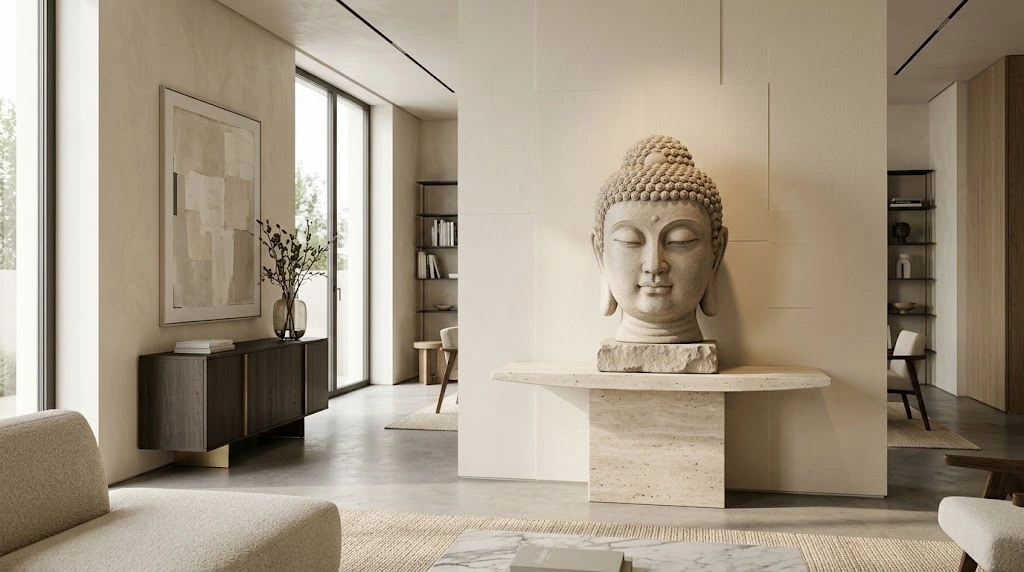
Ceramic has been used for centuries to create objects of beauty, craftsmanship and cultural significance. From ancient sculptures to contemporary works of art, the material has remained remarkably timeless.
Today, ceramic continues to hold a distinctive place in luxury interiors. Its natural texture, versatility and ability to capture intricate forms make it particularly well suited to sculptural pieces designed to become part of a sophisticated space.
At Maitreya Buddha, ceramic is at the heart of our collection. Each Buddha sculpture is designed to combine refined craftsmanship, timeless form and a sense of quiet presence.
Why Ceramic Has Remained Timeless
Few materials have maintained their relevance across centuries as successfully as ceramic.
Its appeal comes from its unique combination of characteristics. Ceramic can appear soft and subtle, yet it is remarkably durable. It can be smooth and polished, or textured and expressive. It can also be shaped into highly detailed forms while retaining a strong architectural presence.
This versatility allows ceramic sculptures to adapt to very different interior styles.
From minimalist spaces to modern classic interiors, a carefully crafted ceramic sculpture can feel both contemporary and timeless.
A Material That Celebrates Craftsmanship
One of ceramic’s greatest qualities is its ability to reveal the work of the artisan.
Unlike mass-produced decorative materials, ceramic can retain subtle variations in texture, shape and finish. These details contribute to the character of the finished piece.
The process of creating a ceramic sculpture requires precision at every stage, from shaping the form to refining the surface and applying the final finish.
Small details can make a significant difference.
The contours of a face, the proportions of a sculpture and the subtle texture of its surface all influence how the finished piece interacts with light.
This is particularly important for Buddha sculptures, where the expression and silhouette are central to the visual character of the piece.
Ceramic and the Language of Luxury
Luxury is not necessarily about excess.
In contemporary interiors, luxury often comes from the quality of materials, the precision of craftsmanship and the restraint of the overall composition.
Ceramic naturally complements this approach.
Its tactile surface can introduce depth without overwhelming a room. Its sculptural quality allows a single piece to become a focal point without requiring additional decoration.
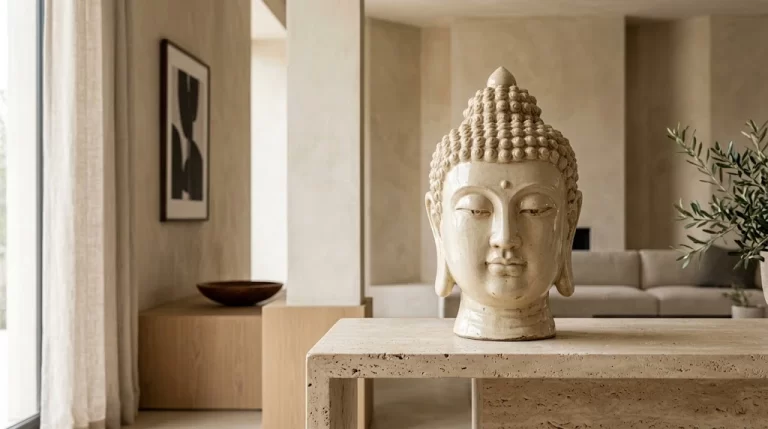
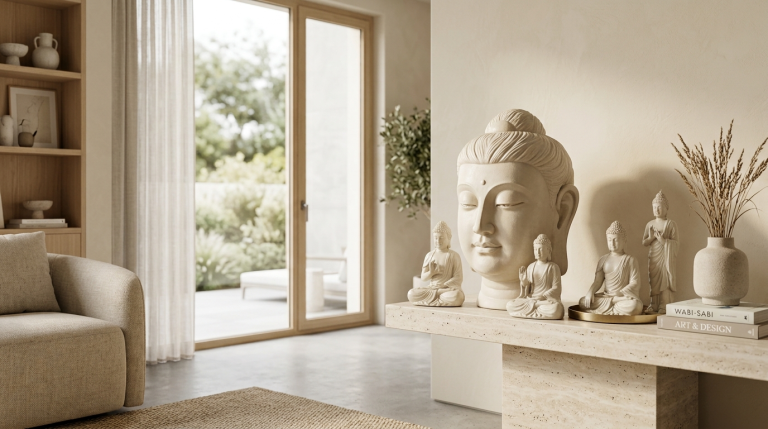
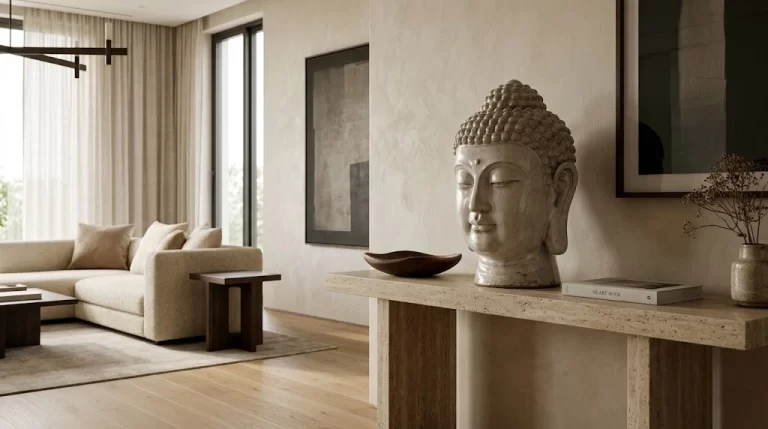
Placed on a travertine console, a dark wood sideboard or a minimalist architectural shelf, a ceramic Buddha sculpture can create a sophisticated contrast between form and material.
The result is subtle, elegant and intentional.
The Beauty of Light on Ceramic
Light is one of the most fascinating aspects of ceramic.
The surface of a sculpture interacts with natural and artificial light, revealing its contours and creating subtle variations in tone.
A smooth white ceramic surface can reflect soft daylight and create a bright, almost architectural presence.
A darker finish can absorb light and emphasize the depth of the sculpture.
Textured ceramic can create delicate shadows across the surface, revealing details that may not be immediately visible.
This interaction between light and material is one of the reasons ceramic sculptures work particularly well in carefully designed interiors.
White, Black and Natural Finishes
One of the advantages of ceramic is the variety of finishes it can accommodate.
White Ceramic
White and ivory finishes create a sense of purity and simplicity.
They work particularly well in minimalist, Japandi and contemporary interiors, where the sculpture can become a subtle focal point against neutral architectural backgrounds.
Black Ceramic
Black ceramic creates a stronger visual statement.
Its depth and contrast can complement dark wood, stone, metal and contemporary furniture, making it particularly effective in sophisticated modern interiors.
Natural and Neutral Tones
Warm beige, sand and stone-inspired finishes can create a softer relationship between the sculpture and its surroundings.
These tones work naturally with travertine, limestone, oak, linen and other organic materials commonly found in refined interiors.
Ceramic as a Bridge Between Art and Interior Design
A sculpture occupies an interesting position between art and interior decoration.
It can be appreciated for its form and craftsmanship while simultaneously contributing to the atmosphere of a room.
Ceramic is particularly effective in this role because it feels both artistic and architectural.
A well-proportioned Buddha sculpture can introduce rhythm, symmetry and visual balance without becoming the dominant element of the interior.
This makes it possible to integrate a sculptural object into a living environment rather than simply displaying it as decoration.
Why Ceramic Works So Well for Buddha Sculptures
The human face is one of the most challenging forms to reproduce in sculpture.
Small differences in proportion, expression and contour can completely change the character of a piece.
Ceramic allows these details to be carefully developed and preserved.
The material can capture the smooth curves of the head, the subtle expression of the eyes and the distinctive lines of the face while maintaining a refined surface.
For Buddha sculptures, this combination of form and material is especially meaningful.
The result is an object that can communicate stillness and balance through its physical presence, while remaining firmly connected to contemporary art and interior design.
A Material Designed to Last
When properly crafted and cared for, ceramic can remain beautiful for generations.
Unlike temporary decorative trends, the material itself has a timeless quality.
This makes a high-quality ceramic sculpture more than an accessory for a particular interior.
It can become a long-term part of a home, office, hotel or collection.
Its appearance can also evolve with its surroundings. As furniture, lighting and interior styles change, a well-designed ceramic sculpture can continue to feel relevant.
Caring for a Ceramic Sculpture
Although ceramic is durable, proper care helps preserve its appearance.
A soft, dry or slightly damp cloth is generally sufficient for removing dust. Avoid abrasive materials or aggressive cleaning products that could affect the surface or finish.
When moving a larger sculpture, it is important to handle it carefully and support its main structure rather than applying pressure to delicate details.
Positioning also matters. A stable surface away from areas with heavy traffic can help reduce the risk of accidental impact.
With simple care, a quality ceramic sculpture can remain a distinctive part of an interior for many years.
Choosing Ceramic as a Statement Piece
When selecting a ceramic sculpture, consider more than its appearance alone.
Think about:
- The quality of the craftsmanship
- The proportions of the sculpture
- The character of the expression
- The finish and texture
- The scale of the piece
- The materials already present in your interior
- The way natural and artificial light interact with the sculpture
The most successful choice is often the piece that feels naturally connected to its surroundings while still possessing enough character to stand on its own.
The Timeless Appeal of Ceramic
Trends change. Materials come and go. Interior styles evolve.
Ceramic, however, continues to occupy a unique position in the world of art and design.
Its tactile quality, durability and ability to express intricate forms make it an exceptional material for sculptural objects.
For a Buddha sculpture, these qualities become even more significant. The material gives form to an object whose visual language is built around balance, proportion and serenity.
At Maitreya Buddha, we believe that a sculpture should be more than something placed in a room.
It should have presence.
It should reveal craftsmanship.
And above all, it should remain beautiful long after the trends surrounding it have changed.
Discover the Maitreya Buddha collection and explore our selection of refined ceramic sculptures designed for timeless interiors.
[ EXPLORE THE COLLECTION ]