Address
Pantelleria, 91017 Sicily, Italy.

How to Choose the Perfect Buddha Head for Your Home

Choosing a Buddha sculpture for your home is about more than finding a beautiful decorative object.
The right piece should feel naturally connected to its surroundings while bringing its own character, presence and sense of balance to the space.
With different sizes, finishes, expressions and styles available, selecting the perfect Buddha head can sometimes feel overwhelming.
The key is to consider the relationship between the sculpture, your interior and the atmosphere you want to create.
At Maitreya Buddha, we believe that a sculpture should not simply fill an empty space. It should become part of the identity of the room.
Start With Your Interior Style
Before choosing a sculpture, look at the existing character of your space.
Consider the furniture, materials, architectural details and overall color palette. Your Buddha sculpture can either complement these elements or create a carefully considered contrast.
Minimalist Interiors
Minimalist spaces benefit from simplicity.
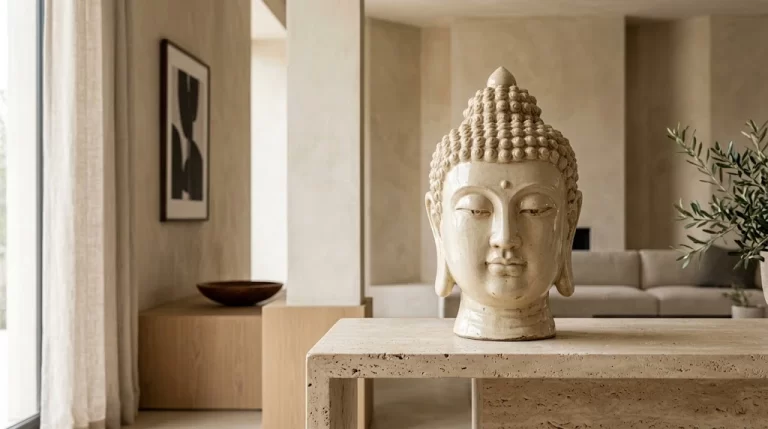
A refined white, ivory or neutral ceramic Buddha head can introduce a sculptural focal point without disrupting the clean lines of the room.
Choose a piece with an elegant silhouette and allow plenty of space around it.
Japandi Interiors
Japandi interiors combine Japanese simplicity with warm Scandinavian design.
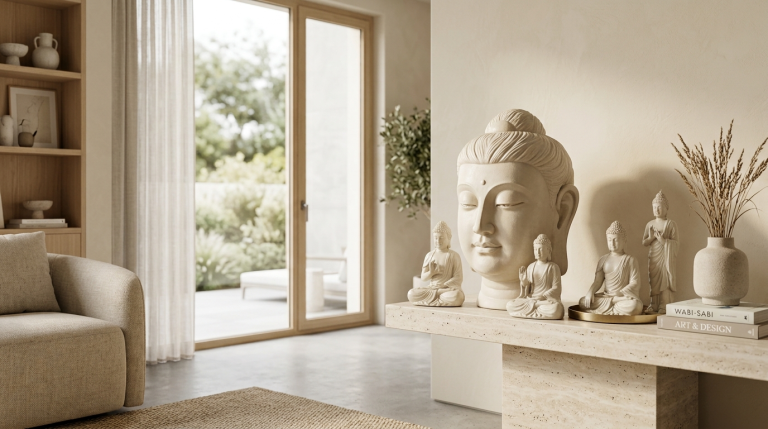
Natural materials such as oak, linen and stone work particularly well with ceramic sculpture.
A Buddha head in an understated neutral finish can complement this aesthetic beautifully, especially when paired with warm natural textures.
Modern Interiors
Contemporary interiors offer more freedom to experiment with contrast.
A black ceramic Buddha head can create a strong architectural statement against lighter walls, while a sculptural piece with a distinctive finish can become an artistic focal point.
Modern Classic Interiors
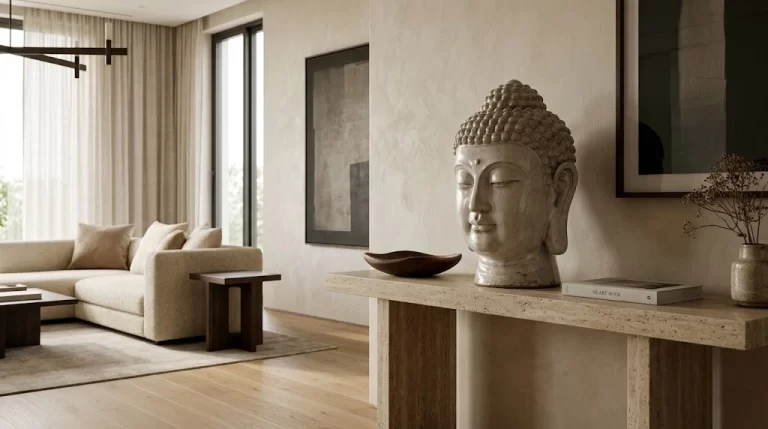
For a more sophisticated and timeless interior, consider combining the sculpture with marble, travertine, dark wood or subtle metallic details.
A carefully selected ceramic Buddha head can sit comfortably alongside classic furniture while adding a contemporary artistic element.
Choose the Right Size
Size is one of the most important factors when selecting a sculpture.
A piece that is too small can disappear within a large room, while an oversized sculpture may overpower the surrounding furniture.
Think about where the sculpture will be displayed.
Small Buddha Heads
Smaller pieces are ideal for:
- Bedside tables
- Shelves
- Consoles
- Desks
- Small side tables
They can also be used as part of a carefully composed collection of decorative objects.
Medium Sculptures
Medium-sized Buddha heads offer greater visual presence while remaining versatile.
They work particularly well on:
- Living-room consoles
- Sideboards
- Entryway furniture
- Large shelves
- Architectural niches
Large Statement Pieces
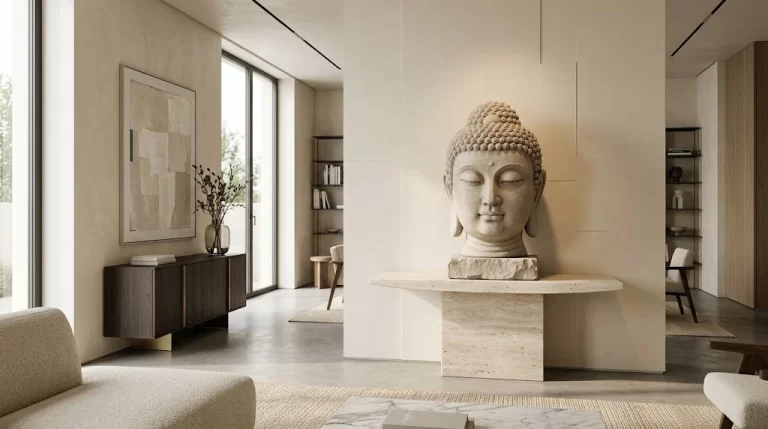
A large Buddha sculpture can become the defining element of an interior.
These pieces are particularly effective in spacious living rooms, entrance halls, boutique hotels and other environments where the architecture allows the sculpture to breathe.
When choosing a large piece, negative space becomes especially important.
Consider the Finish
The finish of your sculpture can completely change its visual impact.
White and Ivory
White and ivory ceramic create a calm and timeless appearance.
These finishes are particularly suitable for light interiors and neutral color palettes.
They can also create a beautiful contrast against darker walls or furniture.
Black
Black ceramic offers a more dramatic and contemporary character.
It can anchor a room visually and works especially well with stone, dark wood, metal and neutral architectural backgrounds.
Gold and Metallic Details
Gold and metallic finishes can introduce warmth and a sense of luxury.
Rather than matching every decorative element, consider using metallic accents selectively. A subtle connection between the sculpture and existing lighting, furniture or architectural details can create a cohesive composition.
Natural and Earthy Tones
Warm beige, sand and stone-inspired finishes are ideal for interiors built around organic materials.
They pair naturally with travertine, limestone, oak, linen and other tactile surfaces.
Look at the Expression
The expression of a Buddha sculpture is one of its most important characteristics.
Even subtle changes in the position of the eyes, the shape of the lips or the overall facial proportions can influence the feeling of the piece.
Some sculptures appear more contemplative and understated.
Others have a stronger, more defined presence.
When choosing your sculpture, consider the atmosphere you want it to create.
For a bedroom or quiet reading space, a softer and more restrained expression may feel appropriate.
For a living room or entrance, a more sculptural and visually defined piece can create a stronger focal point.
Think About the Material
Ceramic is particularly well suited to Buddha sculptures because it allows refined forms and subtle details to be expressed through the surface.
The texture of the ceramic can also interact beautifully with natural light.
Before choosing a piece, look closely at:
- The surface texture
- The quality of the finish
- The precision of the details
- The proportions of the sculpture
- The way light interacts with the material
A high-quality ceramic sculpture should feel visually sophisticated even when viewed up close.
Consider the Background
The wall or architectural surface behind your sculpture plays an important role.
A light Buddha sculpture can almost disappear against a white wall if there is not enough contrast.
Similarly, a dark sculpture may become visually heavy against an equally dark background.
Think about creating contrast through:
- Wall color
- Lighting
- Furniture
- Natural materials
- Texture
A neutral wall can provide an elegant backdrop, while a darker architectural surface can create a dramatic gallery-like presentation.
Give the Sculpture Enough Space
One of the most common mistakes when decorating with sculpture is overcrowding.
A Buddha head does not necessarily need candles, plants, books and numerous decorative accessories around it.
Sometimes the most luxurious presentation is the simplest one.
Allow the sculpture to breathe.
A clean console, a refined wall and a single exceptional sculpture can create a stronger visual statement than a crowded arrangement.
Negative space gives the eye somewhere to rest and allows the form of the sculpture to become the main focus.
Think About Lighting
Lighting can dramatically change the appearance of ceramic.
Natural daylight can reveal subtle textures and create soft variations across the surface.
In the evening, discreet architectural or accent lighting can emphasize the contours of the sculpture and create a more intimate atmosphere.
Avoid placing the sculpture directly under harsh overhead lighting whenever possible.
Instead, consider soft directional light that reveals the three-dimensional form.
Where Should You Place a Buddha Head?
There is no single location that works for every home.
The best position depends on the architecture and purpose of the room.
Living Room
A console or sideboard can provide an excellent setting for a medium or large Buddha head.
The sculpture can become a sophisticated focal point without competing with the main furniture.
Entrance
The entrance is an ideal location for creating a strong first impression.
A Buddha sculpture placed on a refined console can establish a sense of calm and elegance as soon as someone enters the home.
Bedroom
A smaller sculpture can introduce a quieter visual element into the bedroom.
Choose a location where it can be appreciated without making the room feel overly decorated.
Home Office
A carefully selected sculpture can add character to a professional environment.
Placed on a shelf, console or sideboard, it can provide a visual pause within an otherwise functional space.
Choose a Sculpture That Feels Like Art
A Buddha head can have cultural and spiritual significance, but it can also be appreciated for its sculptural qualities, craftsmanship and visual presence.
When selecting a piece for your home, take the time to look beyond the basic category.
Consider the silhouette.
Consider the expression.
Consider the material.
Consider how the sculpture interacts with light.
Most importantly, consider how you feel when you see it in your space.
The right piece should feel intentional rather than simply decorative.
A Timeless Addition to Your Interior
A well-chosen Buddha sculpture can remain relevant even as your interior evolves.
Furniture can change. Walls can be repainted. Decorative trends can come and go.
A beautifully crafted ceramic sculpture can continue to provide a sense of character and permanence.
That is what makes choosing the right piece so important.
It should not simply match your home today.
It should be something you can continue to appreciate for years to come.
Find Your Perfect Buddha Sculpture
Choosing a Buddha head ultimately comes down to a combination of proportion, material, finish, expression and personal taste.
Look for a piece that complements your interior while maintaining enough character to stand independently.
At Maitreya Buddha, our collection is designed for those who appreciate refined craftsmanship, timeless forms and distinctive objects.
Whether you are looking for a subtle sculptural accent or a statement piece with a strong presence, the right Buddha sculpture can transform the atmosphere of a room.
Explore the Maitreya Buddha collection and discover the piece that belongs in your space.
[ EXPLORE THE COLLECTION ]