Address
Pantelleria, 91017 Sicily, Italy.

The Meaning Behind Buddha Expressions and Mudras

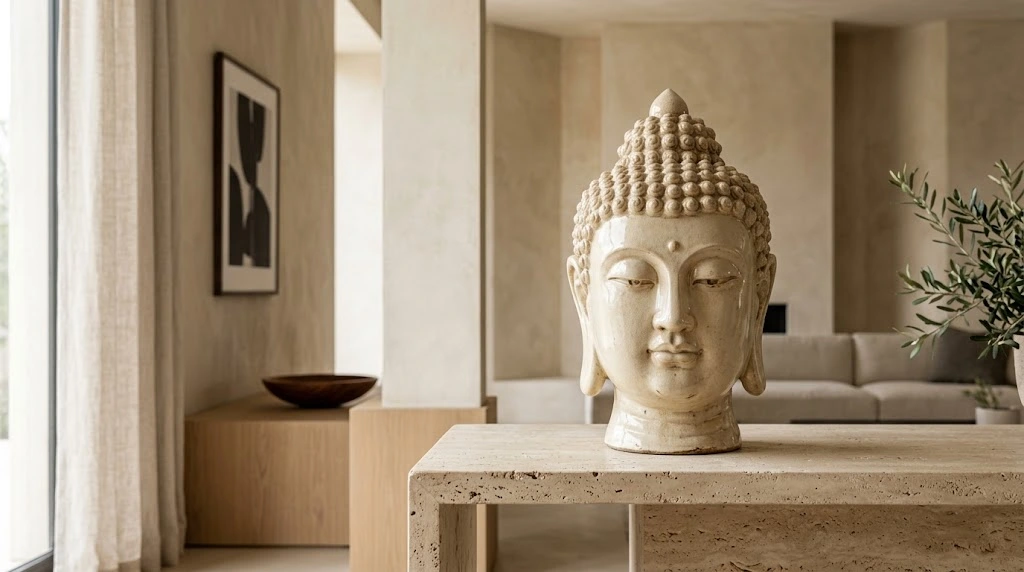
A Buddha sculpture is more than a decorative object. Every expression, gesture and posture can carry a deeper meaning, giving the sculpture a distinctive character and a sense of presence within an interior.
For centuries, Buddhist art has used facial expressions and hand gestures — known as mudras — to communicate ideas such as serenity, wisdom, protection and compassion.
Today, Buddha sculptures are also appreciated as works of art, bringing balance, character and timeless elegance to contemporary interiors.
Understanding the meaning behind these details can make choosing a Buddha sculpture a more personal and intentional experience.
The Language of the Buddha
One of the most captivating aspects of Buddha sculpture is the subtle language expressed through the face and hands.
Unlike decorative objects designed purely for visual impact, traditional Buddha representations often communicate through quiet details. A slight expression, the position of the hands or the posture of the head can influence the character of the entire sculpture.
This subtlety is particularly relevant in contemporary interiors, where refined objects are often chosen for both their aesthetic qualities and their meaning.
The Meaning of the Buddha’s Expression
The expression of a Buddha sculpture is often one of its most defining characteristics.
A serene face can create a feeling of calm and balance, while a more contemplative expression can suggest introspection and wisdom.
Serenity
A peaceful, relaxed expression is one of the most recognizable characteristics of Buddha imagery.
The softened eyes and composed features can evoke a sense of stillness and tranquility, making this type of sculpture particularly suitable for minimalist and serene interiors.
Contemplation
A more inward-looking expression can suggest meditation, reflection and inner awareness.
These sculptures can work especially well in spaces designed around quietness and simplicity, such as a reading room, bedroom or private office.
Compassion
Gentle facial features can also be associated with compassion and benevolence.
The overall effect is subtle rather than dramatic, allowing the sculpture to introduce warmth and humanity into an interior without overwhelming the space.
What Are Mudras?
The word mudra refers to a symbolic hand gesture traditionally used in Buddhist and Hindu traditions.
In Buddhist art, different hand positions can represent different concepts, teachings or moments associated with the Buddha.
Although the exact meanings and interpretations can vary according to Buddhist tradition and artistic context, several mudras are particularly recognizable.
The Meditation Mudra
The meditation mudra is commonly represented with both hands resting in the lap, with the palms facing upward.
It is strongly associated with meditation, concentration and inner balance.
Its symmetrical composition also gives the sculpture a particularly harmonious visual quality, making it a natural choice for refined minimalist interiors.
The Abhaya Mudra
The abhaya mudra is traditionally represented with one hand raised, palm facing outward.
It is commonly associated with protection, reassurance and the absence of fear.
As a visual gesture, it creates a more open and expressive presence than the meditation mudra, making it an interesting choice for an entrance hall or a prominent architectural setting.
The Bhumisparsha Mudra
The bhumisparsha mudra is often called the “earth-touching gesture.”
It depicts the Buddha with one hand reaching toward the ground while the other rests in the lap.
The gesture is traditionally associated with the moment of awakening and the Buddha’s calling upon the earth as witness.
Its distinctive silhouette gives sculptures featuring this mudra a strong artistic presence.
The Dharmachakra Mudra
The dharmachakra mudra is associated with the Buddha’s teaching and the “turning of the wheel of Dharma.”
The hands are positioned near the chest in a symbolic gesture that represents the communication of Buddhist teachings.
For collectors and art enthusiasts, sculptures featuring this mudra can offer an additional layer of meaning beyond their visual appeal.
Choosing a Buddha Sculpture Based on Its Character
When selecting a Buddha sculpture for your interior, symbolism can be considered alongside design.
Think about the atmosphere you want the sculpture to create.
A serene meditation expression may complement a minimalist bedroom or quiet living space. A more expressive hand gesture can create a stronger focal point in an entrance or contemporary living room.
The goal is not simply to choose a sculpture based on its symbolism, but to find a piece whose form, expression, finish and proportions work naturally within your environment.
Expression, Material and Finish
The meaning of a Buddha sculpture is only one part of its character.
The material and finish can dramatically change how the sculpture is perceived.
A matte white or ivory ceramic finish can create a soft, understated presence.
A deep black ceramic finish can introduce contrast and architectural sophistication.
A subtle metallic detail can add a more distinctive and luxurious character when used with restraint.
Ceramic is particularly suited to this approach because its surface interacts beautifully with natural and artificial light, revealing subtle variations across the sculpture’s contours.
A Symbol of Serenity in Contemporary Interiors
You do not need to create a traditional spiritual setting to appreciate the visual and symbolic qualities of a Buddha sculpture.
In contemporary design, these pieces can function as sophisticated works of art.
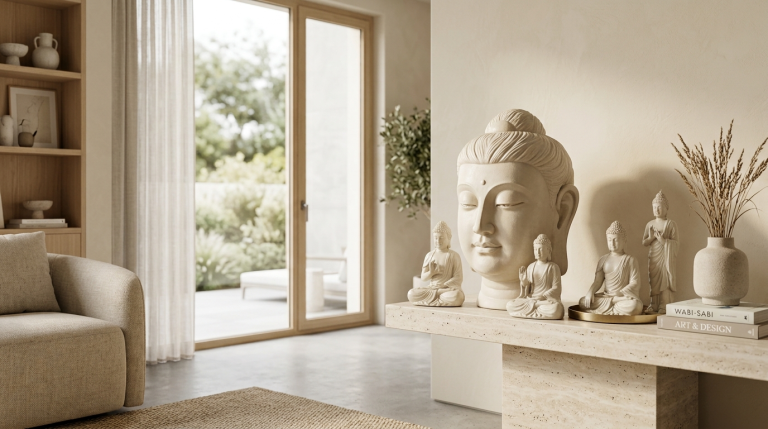
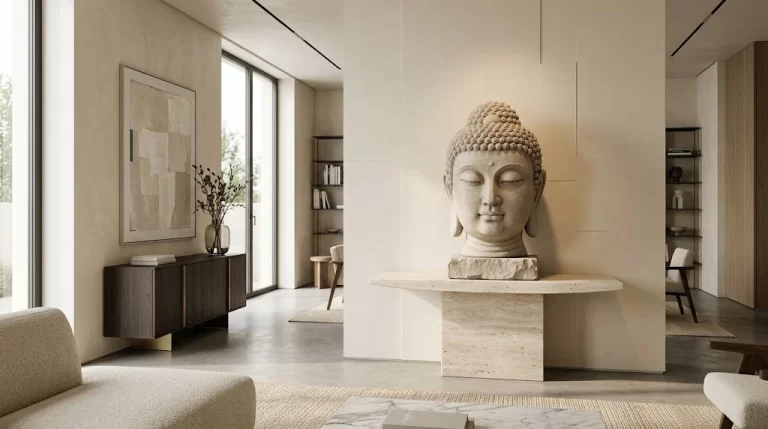
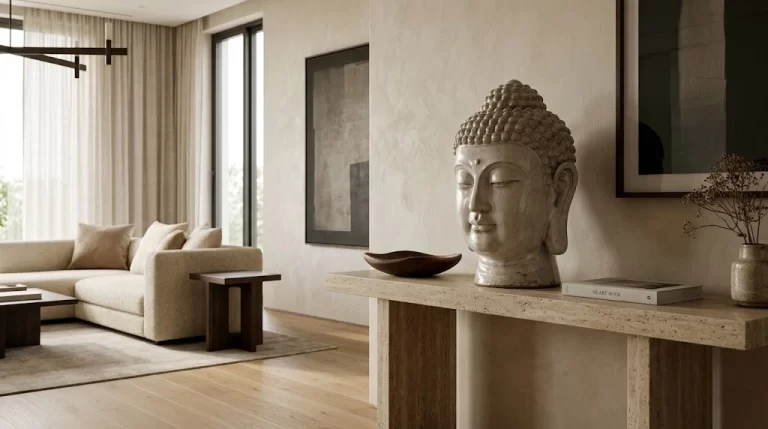
Placed on a travertine console, a sculptural pedestal, a refined bookshelf or a minimalist sideboard, a Buddha head can become a quiet focal point within the room.
The surrounding environment should remain simple enough to allow the sculpture to breathe.
Let the Sculpture Speak
The beauty of a Buddha sculpture often lies in its restraint.
Rather than relying on excessive decoration, its presence comes from proportion, craftsmanship, expression and material.
This makes it particularly well suited to modern luxury interiors, where carefully selected objects are given space and attention.
Whether chosen for its symbolism, its craftsmanship or simply its visual presence, a Buddha sculpture can become an enduring part of an interior.
Choosing a Meaningful Piece
Selecting a Buddha sculpture is ultimately a personal decision.
You may be drawn to the peaceful expression of a meditating Buddha, the protective gesture of the abhaya mudra or the powerful symbolism of the earth-touching gesture.
Whatever your preference, take the time to consider how the sculpture makes you feel and how naturally it connects with your space.
A well-chosen piece should not simply fill an empty surface.
It should bring character, balance and presence.
Discover the Maitreya Buddha Collection
At Maitreya Buddha, each sculpture is selected for its refined form, ceramic craftsmanship and ability to complement sophisticated interiors.
Explore the collection and discover a piece that combines timeless symbolism with contemporary